

A 5,270 mm plug-in hybrid flagship from BYD's Fangchengbao brand - 310 km electric range, ten-screen cabin, 2,000 kg towing. Chinese deliveries from mid-November 2026.
The Fangchengbao Tai 9 is the largest vehicle BYD's off-road-flavoured sub-brand has built: a 5,270 mm six-seat plug-in hybrid SUV that goes on sale in China after 15 November. For buyers sourcing Chinese new energy vehicles, it is the first model in the range that combines genuine full-size packaging with a plug-in powertrain and a second row built to limousine standards.
Why this one is worth a look
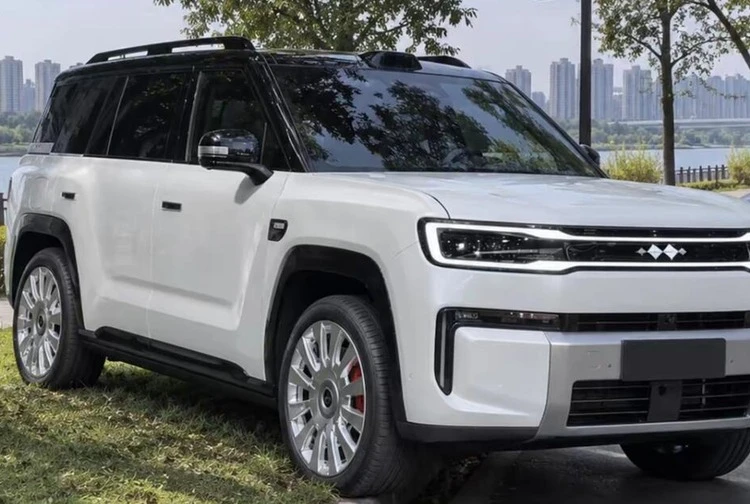
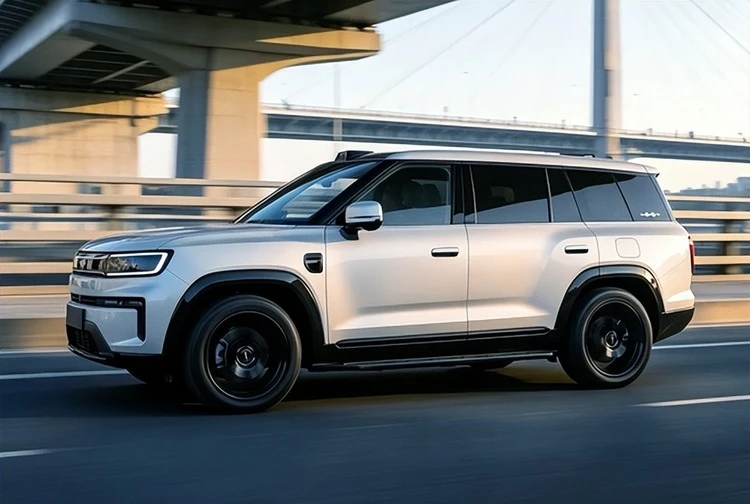
Three things separate the Tai 9 from the seven-seat plug-in hybrids already moving through Chinese ports. First, size: at 5,270 mm with a 3,130 mm wheelbase it sits a full class above the Tai 7, with a boxy silhouette that keeps third-row headroom usable. Second, the powertrain: a 66.48 kWh lithium iron phosphate pack gives 310 km of WLTC electric range, enough that most owners will treat the 1.5-litre turbo engine as a range extender rather than a primary source. Third, the cabin hardware, which is specified well beyond what the segment normally offers.
Powertrain and running gear
The Tai 9 debuts BYD's new DMS hybrid platform. A 1.5-litre turbocharged four-cylinder produces 115 kW; a 200 kW motor on each axle brings the system total to 400 kW, or 544 PS, with electric all-wheel drive as standard. Fangchengbao quotes 1,630 km combined range on a full tank and full charge, 6.4 L/100 km in charge-sustaining WLTC running, and a 220 km/h top speed. Kerb weight is 2,865 kg and the towing rating is 2,000 kg.
Chassis hardware includes rear-wheel steering at up to 7°, the Yunian-P hydraulic body control system with 75 mm of height adjustment, and six-piston front calipers behind 21-inch wheels (22-inch optional). A roof-mounted lidar supports the God's Eye B driver-assistance suite.
=
The cabin is the sales argument
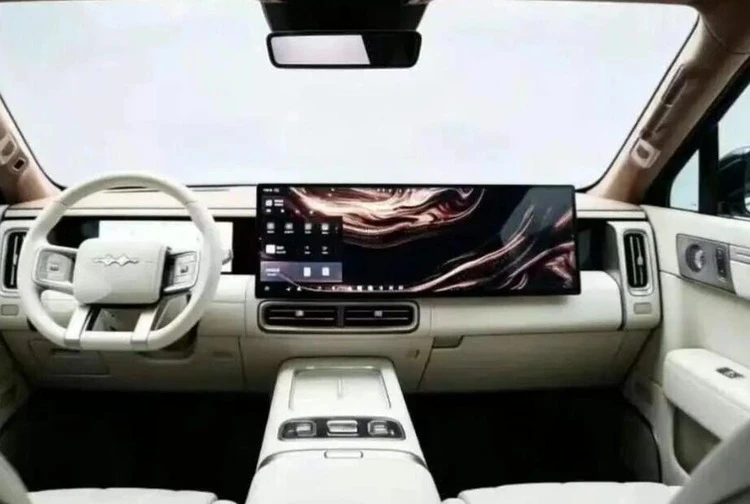
Fangchengbao calls the interior a "5D cockpit": a 30-inch centre-and-passenger display, a 12.3-inch instrument panel, a 50-inch augmented-reality head-up display, a streaming rear-view mirror, a 6.6-inch detachable rear screen and a 21.4-inch roof-mounted display, with four BYD Pad expansion ports and up to ten connected screens. Audio is a 31-speaker Devialet system with headrest speakers in the first two rows; there is an 11.3-litre double-door fridge and a nano-aqueous-ion air system.
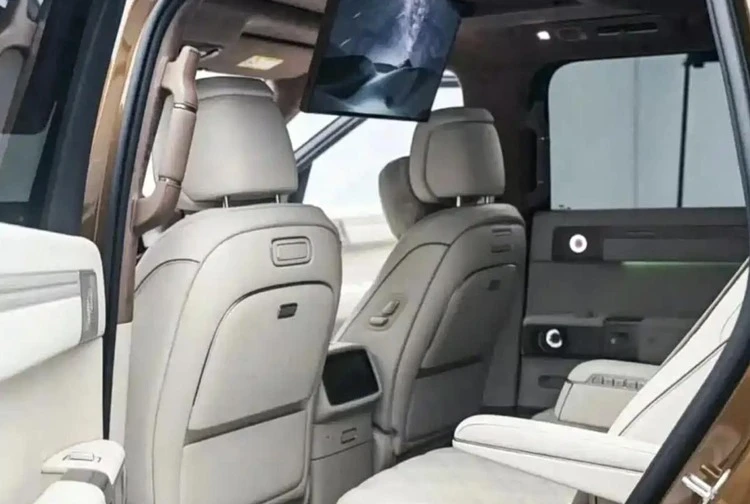
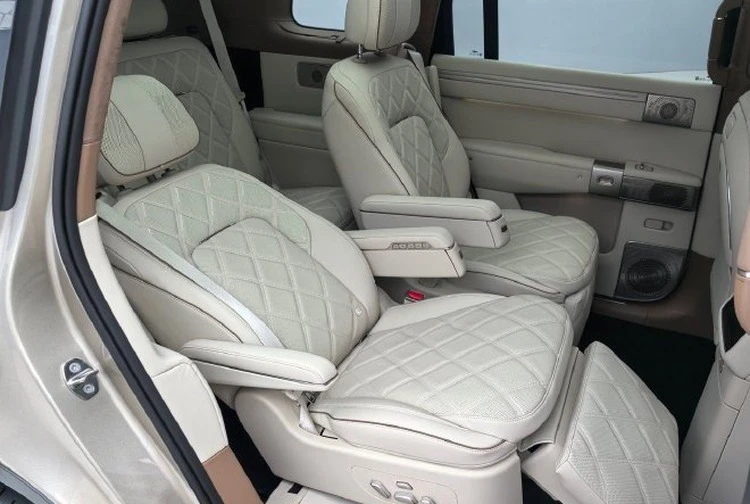
The seats carry the argument further. The front passenger seat rocks gently in what Fangchengbao calls cradle mode. The second row is a pair of independent zero-gravity chairs with heating, ventilation, massage, 140°-plus recline, electric leg rests, powered armrests and a lateral sliding function that moves the two seats together or apart. The third row gets the same heating, ventilation and massage treatment plus its own vents, cupholders and charging ports - the "no penalty seat" claim that most six-seat SUVs struggle to deliver.
Practical numbers: 655 litres of boot space with all six seats in use, 1,245 litres with the third row folded, a 60-litre under-floor compartment and 59 storage points. The split "sky-and-earth" tailgate is rated to 300 kg, opens and closes in five seconds and holds at any angle between 0° and 72°.
Specifications
| Model | Tai 9 (2026, base trim) |
|---|---|
| Body type | 5-door, 6-seat SUV |
| L × W × H (mm) | 5270 × 1999 × 1850 |
| Wheelbase (mm) | 3130 |
| Track, front / rear (mm) | 1716 / 1730 |
| Approach / departure angle | 19° / 22° |
| Kerb weight (kg) | 2865 |
| Gross vehicle weight (kg) | 3495 |
| Towing capacity (kg) | 2000 |
| Engine | BYD472ZQB, 1.5T turbo L4, 1498 mL |
| Engine max power | 115 kW (net 110 kW) |
| Front motor | 200 kW |
| Rear motor | 200 kW |
| System output | 400 kW / 544 Ps |
| Battery | LFP (FinDreams cells), 66.48 kWh |
| WLTC electric range | 310 km |
| Combined range | 1,630 km |
| WLTC fuel use, charge-sustaining | 6.4 L/100 km |
| Drivetrain | Electric AWD |
| Top speed | 220 km/h |
| 0–100 km/h (s) | - |
| Transmission | - |
| Body structure | Unibody |
| Tyres | 255/50 R21 (opt. 255/45 R22 / 275/45 R22) |
| Boot volume | 655 L / 1,245 L / 60 L under-floor |
| Drag coefficient | - |
| Vehicle warranty | - |
| Emission standard | China VI |
| FOB price (USD) | 59,500 * |
Figures as published on Autohome for the 2026 base trim. A dash means the manufacturer has not released a figure. * FOB is an estimate calculated from the announced "400,000-yuan class" positioning under our standard formula; the official Chinese price has not been announced and will be confirmed at launch.
FAQ
Short answer: a full-size six-seat plug-in hybrid SUV with 310 km of electric range, 1,630 km combined, ten-screen cabin hardware and a 2,000 kg towing rating. Chinese deliveries begin after 15 November 2026.
- Is the Tai 9 available for export now?
Chinese domestic sales start after 15 November 2026. Export volumes depend on allocation and homologation in the destination market; request a quote for current lead times.
- What is the FOB price?
Indicative FOB is USD 59,500 based on the announced 400,000-yuan positioning. It is an estimate, not a quoted price, and will move once Fangchengbao publishes the official figure.
- Left-hand drive only?
All announced specifications are left-hand drive. No right-hand-drive programme has been confirmed.
- How does it compare with the Tai 7?
Longer, wider, taller and on a 3,130 mm wheelbase against 2,920 mm, with a six-seat layout and a considerably higher equipment level.