

In 2026, overseas new energy vehicle dealers are facing an unprecedented industry turning point: the era of relying purely on low-price volume sales is completely over. Unsold inventory and stock pressure caused by mismatches between vehicle selection and local charging ecosystems are becoming the core factors consuming profits. Global EV export competition has fully entered a new stage where charging ecosystems determine market share.
For overseas B2B dealers, whether a model can achieve fast turnover and strong profitability no longer depends only on range, configuration, and pricing. The real gap between competitors now comes down to several key questions:
Can the local charging network support users' daily commuting and long-distance travel needs?
Is the vehicle compatible with mainstream charging protocols and future ultra-fast charging standards over the next three years?
Can it adapt to local grid policies and energy structures to reduce operational risks?
Does the fleet have controllable lifecycle costs and additional profit potential?
Based on the latest authoritative data from the International Energy Agency (IEA) Global EV Outlook 2026 and global charging infrastructure reports, the global EV market is rapidly entering a "charging infrastructure-driven sales" cycle. Whoever understands regional charging ecosystem differences first and accurately matches vehicles with local markets will gain a decisive advantage in export competition from 2026 to 2028.

1. NACS: The New Entry Threshold for Global High-End Markets
In 2026, the influence of the North American Charging Standard (NACS) has already expanded beyond the United States and become an invisible pass for the global high-end EV market.
Currently, GCC countries in the Middle East, major North American import channels, and premium CIS markets are rapidly building NACS ultra-fast charging networks. More than 90% of newly built ultra-fast charging stations are now using NACS connectors, while existing CHAdeMO and CCS stations are prioritizing the addition of dual NACS charging modules. At the same time, premium vehicles with native NACS compatibility are achieving 12%-18% higher end-user pricing compared to similar non-compatible models, while inventory turnover speeds are 40% faster.
The expansion speed of traditional CHAdeMO infrastructure has clearly slowed down. Major global charging operators, including BP Pulse and Iberdrola, have already listed NACS as a core deployment standard for the next three years. This trend means that vehicles without NACS support will gradually lose access to the global premium fast-charging ecosystem.
Vehicle Selection Recommendations for Overseas Dealers
Over the next 24 months, the following vehicle types will become the absolute mainstream in high-end markets:
Models with native NACS + CCS dual-protocol support, covering over 90% of global public fast-charging networks
Vehicles equipped with 800V high-voltage platforms, fully utilizing the performance advantages of 350kW ultra-fast charging stations
Models with advanced high-temperature battery thermal management systems, reducing user complaint rates by more than 60% in hot-climate regions such as the Middle East
IEA data shows that global ultra-fast charging stations (150kW and above) grew by more than 50% year-over-year in 2024, with Europe reaching a growth rate of 60%. Mainstream 800V platform vehicles can now charge from 10% to 80% in just 15-18 minutes, with peak charging power exceeding 350kW, while keeping charging degradation below 15% even under 40°C environments. "400 km of range in 15 minutes" is no longer a marketing slogan - it has become a hard purchasing requirement for users in the Middle East and North America.
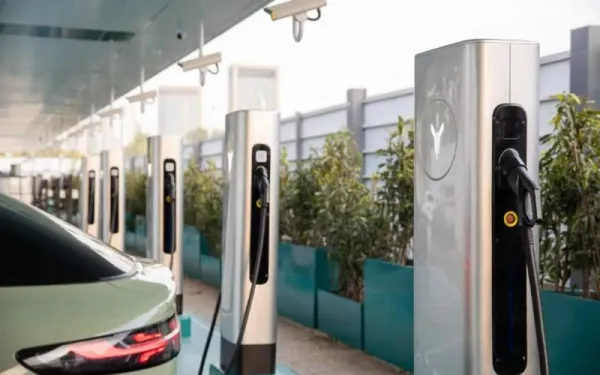
2. V2G: From Technical Concept to a New Fleet Profit Engine
In 2026, Vehicle-to-Grid (V2G) technology officially entered large-scale commercial deployment, completely changing the definition of EV value. EVs are no longer just transportation tools - they are becoming mobile energy assets capable of generating stable revenue.
Countries including Saudi Arabia, the UAE, Germany, and the UK have already introduced clear V2G support policies, allowing EVs to participate in grid balancing, peak-valley electricity arbitrage, home energy storage coordination, and emergency power supply services. For B-end customers, this means a fundamental shift in vehicle purchasing logic:
Past:
Buying a vehicle = one-time investment + ongoing operational costs
Now:
Buying a vehicle = transportation tool + monetizable energy asset
Which Customers Care Most About V2G Capabilities?
Rental companies and ride-hailing platforms: earning an additional $800-$2,000 per vehicle annually through peak-valley electricity pricing
Urban logistics fleets: charging during off-peak nighttime hours and discharging back to the grid during daytime peak demand, shortening payback periods by 1.5-2 years
Government and public utility departments: using fleets as emergency energy storage resources to receive grid subsidies
High-end residential users: integrating home solar systems, EVs, and energy storage into one intelligent energy management solution
This is why, since 2026, more overseas B-end buyers have started listing "bidirectional charging support" and "grid compatibility" as core evaluation standards during inquiries. In high-electricity-price regions across Europe, V2G-compatible vehicle procurement already accounts for more than 35% of total fleet purchases.

3. Charging Infrastructure Maturity Determines the Best Vehicle Choice for Each Market
IEA data shows that global public charging station additions exceeded 1.3 million units in 2024, up 30% year-over-year, bringing the total global public charging network to over 5 million units. However, extreme regional imbalance remains a key reality that exporters must face.
China accounts for 65% of the world's public charging stations, Europe has surpassed 1 million units, while the United States still has fewer than 200,000 public chargers. Emerging markets such as Africa and Central Asia have charging density levels below one-tenth of the global average.
This means one critical thing: no single vehicle can dominate every market. Accurately matching products with local infrastructure maturity is the real key to profitability.

4. 2026 Global Core Market Vehicle Procurement Strategy Guide
Based on the latest IEA infrastructure data and 2026 policy updates from different countries, we have organized the optimal procurement logic for major regions to help dealers reduce inventory risks and improve capital turnover efficiency.
| Market Region | Charging Infrastructure Status | Recommended Vehicle Types | Core Dealer Focus | Key Policies & Risks |
|---|---|---|---|---|
| Middle East GCC Countries | Ultra-fast charging rapidly expanding, 350kW stations exceed 40% | High-end BEVs | 800V platforms, smart cockpit systems, heat insulation | Saudi Arabia targets 30% EV adoption by 2030, with 50% subsidies for ultra-fast charging construction |
| Central Asia / Russia | Long-distance charging gaps remain, urban slow charging dominant | PHEVs / EREVs | AWD capability, cold-weather range, durability | Russia prioritizes PHEV imports, limited pure EV subsidies |
| Africa (South Africa / Nigeria) | Weak grid stability, charging coverage below 20% | Hybrids, compact EVs | Ground clearance, low failure rates, easy maintenance | No nationwide charging policy, infrastructure depends on private operators |
| Europe (EU) | Public fast charging continuously expanding, AFIR regulations implemented | Mid-to-high-end BEVs + PHEVs | Energy efficiency, carbon footprint, V2G compatibility | 150kW fast chargers required every 60 km along major road networks by 2025 |
| Southeast Asia (Indonesia / Thailand) | Urban fast charging improving, rural infrastructure weak | Affordable EVs + PHEVs | Price advantage, localized after-sales service | Indonesia provides tax incentives for locally assembled EVs |
| North America (US / Canada) | NACS becoming mainstream, highway ultra-fast charging still insufficient | NACS-compatible EVs + pickup trucks | Charging protocols, safety standards, pickup segments | Federal charging fund approvals paused, relying on private network expansion |
It is worth noting that while pure EV sales growth in Europe slowed in 2026, plug-in hybrid sales still maintained over 25% year-over-year growth. In emerging markets where charging infrastructure remains immature, plug-in hybrids continue to be the lowest-risk and most stable high-conversion product category.

5. The Next Three Years: Charging Ecosystem Capability Will Define Export Competition
The IEA predicts that by 2030, global public charging capacity will increase nearly ninefold, while ultra-fast charging's share will rise from 10% today to 35%. But for exporters, the real challenge is no longer the vehicle itself - it is the ability to provide complete charging ecosystem solutions for dealers.
1. Ultra-Fast Charging Will Become Standard in High-End Markets
Starting in 2027, major highway service areas across Europe and the Middle East will fully deploy 350kW+ ultra-fast charging stations. Vehicles without 800V high-voltage platforms will be eliminated from long-distance travel markets and limited only to urban commuting scenarios.
2. 800V Platforms Will Determine Vehicle Premium Capability
Today, 800V vehicles already sell for 15%-20% more than comparable 400V models, while inventory turnover is 30% faster. Over the next two years, 800V technology will move down from premium models into the RMB 150,000-200,000 price range and become a mainstream market standard.
3. Grid Compatibility Will Become a Mandatory Procurement Standard
The European Union has clearly stated that starting in 2027, all government-purchased EVs must support V2G functionality. Saudi Arabia and the UAE are also developing similar regulations. Grid compatibility will gradually become a mandatory requirement in B-end procurement.
Conclusion: In 2026, Professional Exporters Sell Solutions, Not
Just Vehicles
Future EV export competition is essentially a competition in understanding local energy structures, predicting policy changes, and matching charging ecosystems.
For overseas dealers, choosing a partner capable of providing integrated vehicle + charging + policy solutions is far more important than simply comparing vehicle prices.
As a leading global new energy vehicle exporter, we not only provide a full range of passenger and commercial EV products, but also offer:
In-depth analysis of regional charging infrastructure conditions and future three-year planning
Vehicle and local charging protocol compatibility assessment reports
V2G business implementation guidance and profitability calculations
Latest policy interpretation and import/export compliance support
👉 Contact our export consultants today to receive one-on-one vehicle selection recommendations!